Dentistry
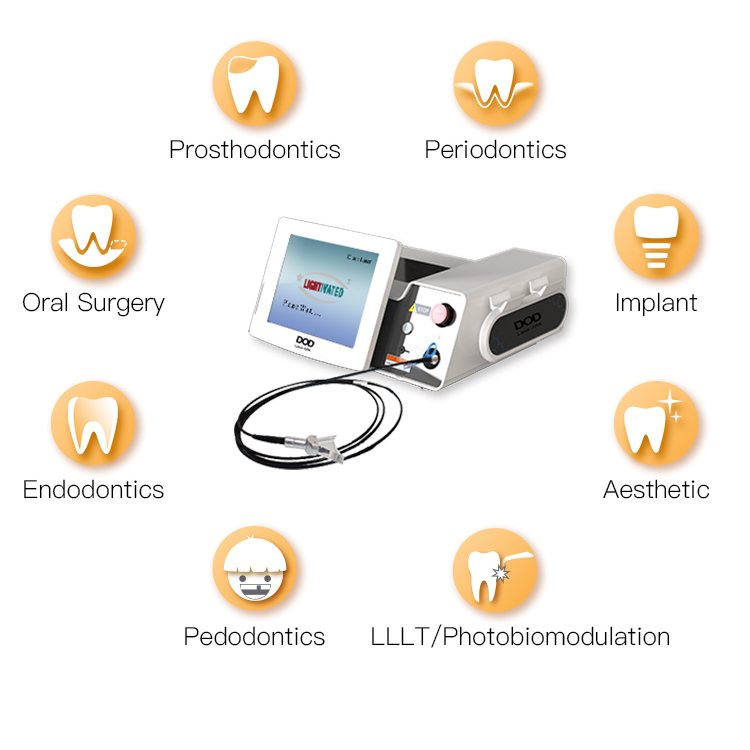
Both 980nm and 1470nm diode lasers rely on precise photothermal effects in dentistry, but their tissue targets and application scenarios differ distinctly due to wavelength variations. Their specific uses are as follows:
1. 980nm diode Laser
- Core Advantages:
High affinity for hemoglobin (providing excellent hemostasis) and ability to interact with water molecules to generate thermal effects.
- Key Application:
1. Periodontal Therapy: Removes bacterial biofilms and granulation tissue in periodontal pockets; assists in scaling and root planing, reducing postoperative bleeding and swelling.
2. Soft Tissue Surgery: Procedures like gingivoplasty, frenectomy, and operculectomy for wisdom teeth—offers precise cutting with nearly bloodless operation.
3. Root Canal Disinfection: Eliminates residual bacteria in root canals via thermal effects, especially as an adjuvant treatment for refractory periapical periodontitis.
2. 1470nm Diode Laser
- Core Advantages: High absorption rate by water molecules, concentrated thermal effects, enabling efficient cutting of hard tissues (dentin, bone) with minimal damage to surrounding soft tissues.
- Key Application:
1. Tooth Preparation: Used for pit and fissure sealing and tooth preparation for resin restorations; reduces patient discomfort from dental drill vibration and lowers the incidence of dentin hypersensitivity.
2. Bone Tissue Surgery: Bone trimming in implant surgery, adjuvant treatment for bone augmentation, and bone windowing/resection in apical surgery—reduces intraoperative bleeding and postoperative bone resorption.
3. Root Canal Therapy: Removes dentin debris and smear layers in root canals; assists in irrigation to improve root canal cleanliness, and can also be used for disinfection of root canal walls.
Previous:No More
Next:No More